



Hyundai Santa Cruz Concept Doesn’t Seem Like The Answer
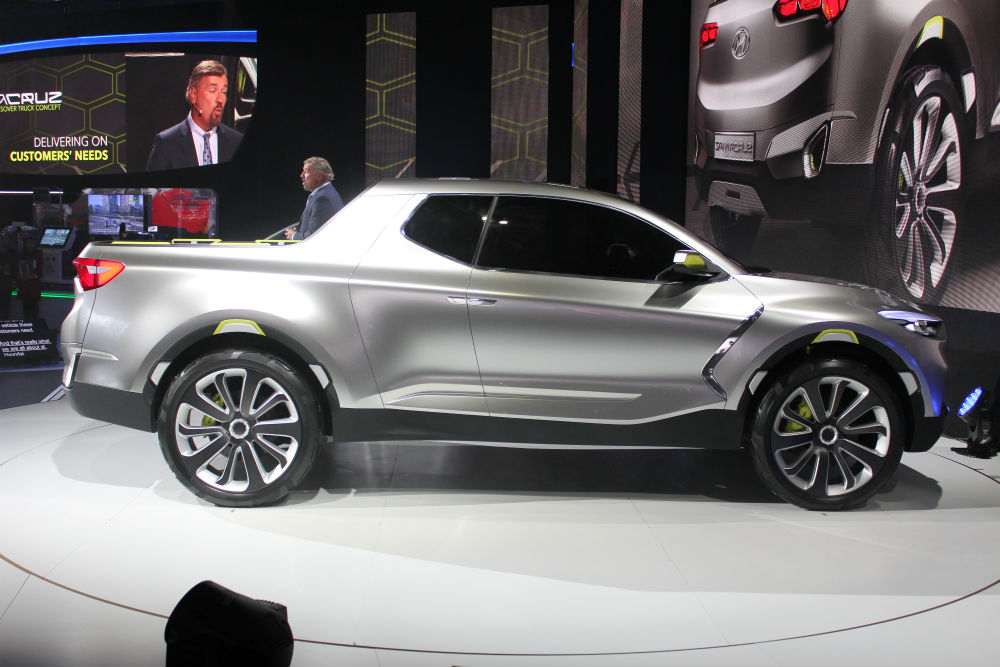
Hyundai only increased its sales by 1 percent in 2014 in an up year for the industry that saw sales increase by an average of 5 percent for manufacturers across the board. But the top brass had an explanation for this at the Detroit Auto Show. You see, truck sales have been moving the needle for other companies. And without a true truck, Hyundai has relied on car sales.
All of the hedging that was taking place led up to the reveal of the Hyundai Santa Cruz concept – a vehicle that Hyundai officials feel could “change the industry.” The vehicle features a small bed similar to a truck in back, while still offering seating for five. This is in response to what Hyundai says is a consumer outcry for a crossover type vehicle that has storage options that aren’t in the main cabin. An example was given of sweaty sports equipment or a large chest of drawers that couldn’t be transported in the back of a crossover.
The Santa Cruz would be ideal for those “in-between times when you need more space” they said. I find it hard to believe this one will actually become a reality. While it may come in handy those few times, the fact is, people don’t really buy vehicles because they may, at some point, need more space once or twice. It may be inconvenient those times when you don’t have the space, but having a small cabin with a truck bed that is not being used 99 percent of the time would seem to be even more inconvenient.
Much of the issue is that the beds on these vehicles are never big enough to really do anything with when you do need it. There’s a reason that the El Camino of old and the even more recent Subaru Baja never really caught on. Why Hyundai thinks this idea is original, I don’t know.
Maybe I’m wrong, but I just don’t see it with this one. Time will tell if it becomes a reality, and if so, if the demand can sustain it. If it all happens, kudos to Hyundai for figuring out this “new” segment.
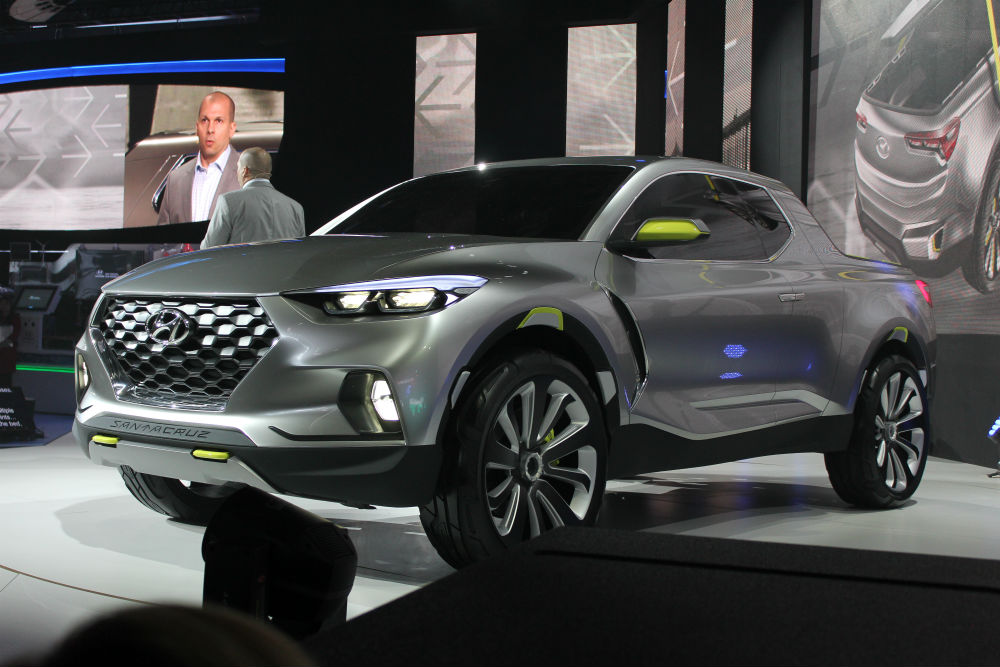
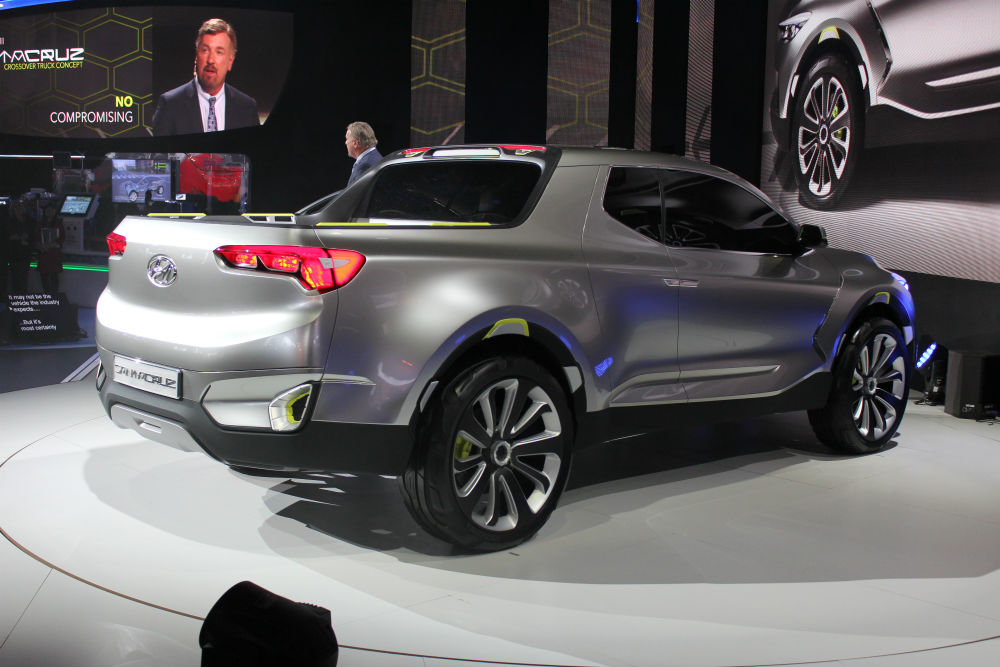





It doesn’t sound like you’re aware of the extending bed. When its extended, its on par with a midsize truck.
Compared to the El Camino, this has a back seat. Compared to the sedan based Baja, this is crossover based and has the taller stance and better looks that Americans prefer. Compared to others like the Ridgeline or Explorer Sport Trac, this actually offers a significant mpg improvement over conventional trucks. It should also be able to undercut truck costs by a good margin.
This is a totally new niche and I think it has a chance of doing well.
I’m 28, male. I’m a GM guy and for years I’ve been wanting Chevy to create this exact vehicle: an All Wheel Drive car with a truck bed. Of course, I wanted it to be called an El Camino and have some throwback styling to the ’68 and ’69s. As reluctant as I am to buy a Hyundai, I would have to seriously consider purchasing this vehicle. I’m a single guy in my 20s, I don’t need a ton of passenger room or cab space. The author says people don’t buy vehicles based on functions they only occasionally need. Then why does anyone buy giant SUVs? Even if you have kids, how often do you actually fill up all 8 seats in that SUV? How often do you actually need all the towing capabilities they have? And does a trunk, truck bed, or SUV/CUV cargo area sit empty just as often as this bed would? This car has everything I need (AWD for the snow, a bed for all my stuff, enough cabin space to get by, and good mileage.
No car appeals to every driver, and this certainly isn’t going to appeal to a family of 5, but for the large segment of people in their 20’s looking to buy their first brand new vehicle, this is a great candidate. Certainly this is a niche vehicle class and would never become a brand flagship, but the niche is large and hungry enough to support limited annual runs of this vehicle. If they can maximize shared parts to keep cost-per-unit down, it could certainly be profitable. Being the only vehicle in its class, it would have a corner on the market for at least a couple years, but I believe that if GM, Ford, Dodge, or a larger foreign brand began producing comparable competition, this line would fail.